

NIRx Webinars
NIRx hosts monthly interactive webinars to inspire learning, spark discussion, and connect the global fNIRS community.
Discover Our Webinars
Our monthly webinars provide interactive, expert-led insights into fNIRS research, NIRx solutions, and best practices across the field. Most sessions are free to attend, offering an accessible way to expand your knowledge, engage with our specialists, and ask questions in real time.
Recordings of previous webinars are available below on this page—ready for you to watch anytime.
Stay informed about upcoming webinars and company news by subscribing to our newsletter.
Upcoming Webinars
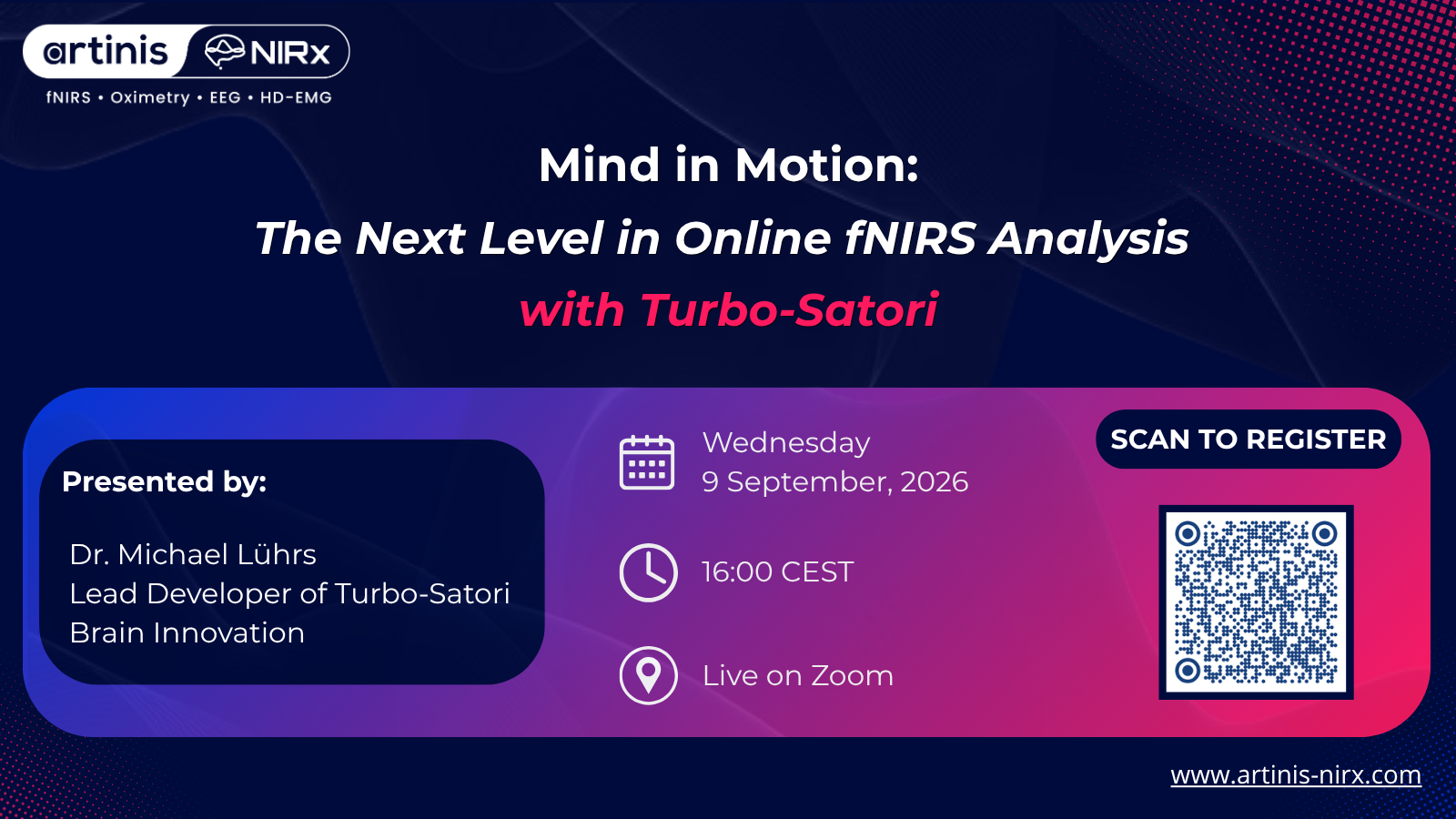
”Mind in Motion”:
The Next Level in Online fNIRS Analysis with Turbo-Satori
Date: September 9, 2026
Time: 4 PM CEST
Speaker: Dr. Michael Lührs, lead developer of Turbo-Satori
Discover the latest advances in real-time fNIRS analysis with the newly released Turbo-Satori update.
In this webinar, Dr. Michael Lührs, lead developer of Turbo-Satori, will introduce the newest capabilities of the software and demonstrate how this major update addresses previous limitations in online fNIRS processing while delivering a faster, more powerful, and intuitive user experience.
Explore how Turbo-Satori expands the possibilities of real-time data analysis and neurofeedback research, with enhanced analytical capabilities, improved performance, and greater flexibility for designing responsive experimental paradigms.
Whether you are already working with Turbo-Satori or exploring online fNIRS analysis for your research, this webinar offers an opportunity to discover the latest developments and see how the new features can support more advanced and flexible fNIRS applications.
Join us to discover the next level of online fNIRS analysis with Turbo-Satori.
Register here.
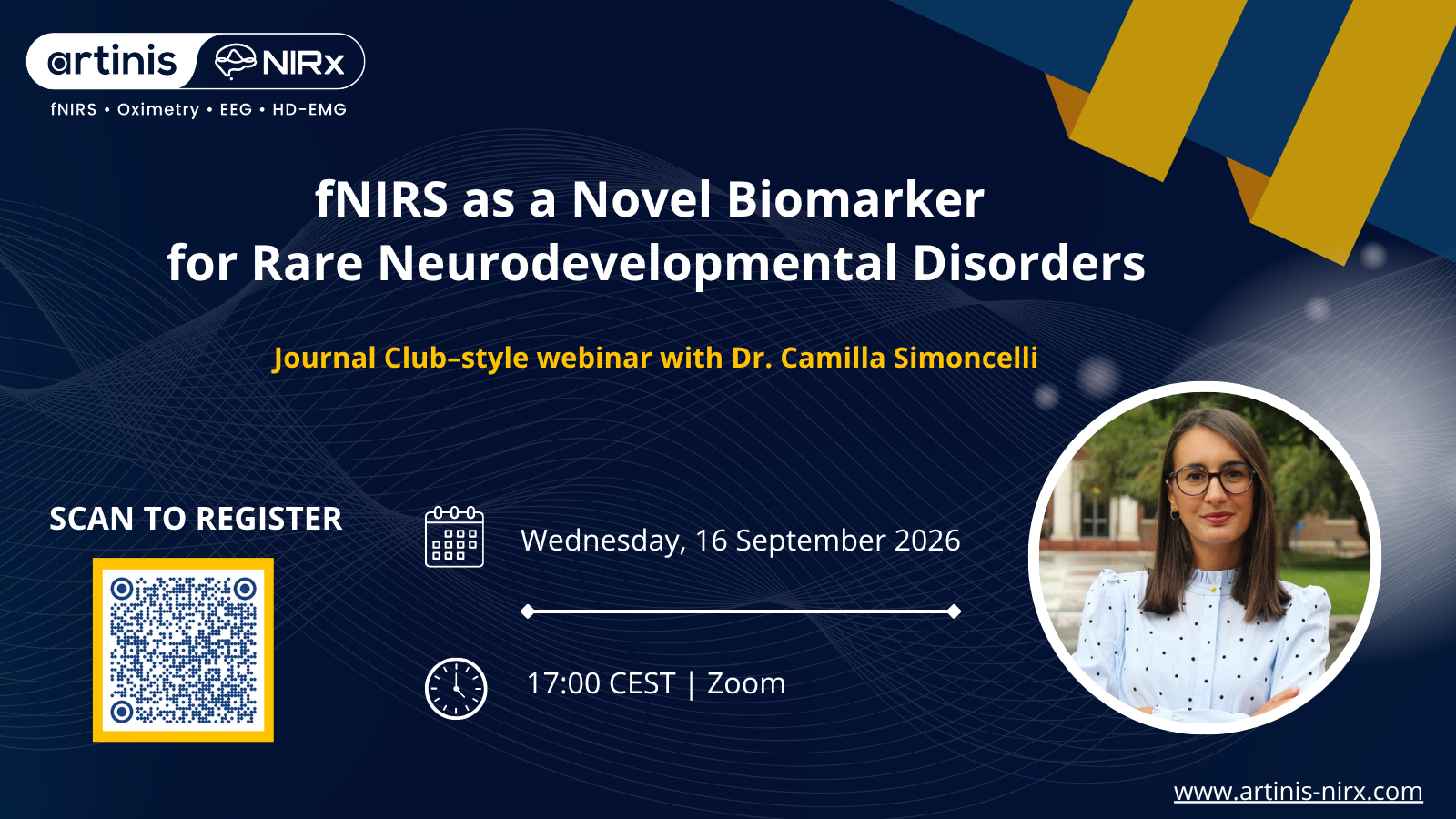
fNIRS as a Novel Biomarker for Rare Neurodevelopmental Disorders
Date: September 16, 2026
Time: 5 PM CEST
Speaker: Camilla Simoncelli, PhD, Researcher in Clinical Neuroscience at the IRCCS Stella Maris Foundation in Pisa, Italy.
Fragile X Syndrome (FXS), Angelman Syndrome (AS), and Creatine Transporter Deficiency (CTD) are rare neurodevelopmental disorders associated with significant cognitive, motor, language, and behavioral impairments.
Despite advances in understanding their underlying genetic mechanisms, a major challenge remains: the lack of validated, objective measures to reliably assess brain function and track therapeutic effects over time.
This webinar explores the potential of functional near-infrared spectroscopy (fNIRS) as a non-invasive and sensitive biomarker for these rare neurodevelopmental disorders.
Join us to learn how fNIRS could contribute to the development of objective biomarkers for rare neurodevelopmental disorders and support future clinical research and therapeutic trials.
Register here.
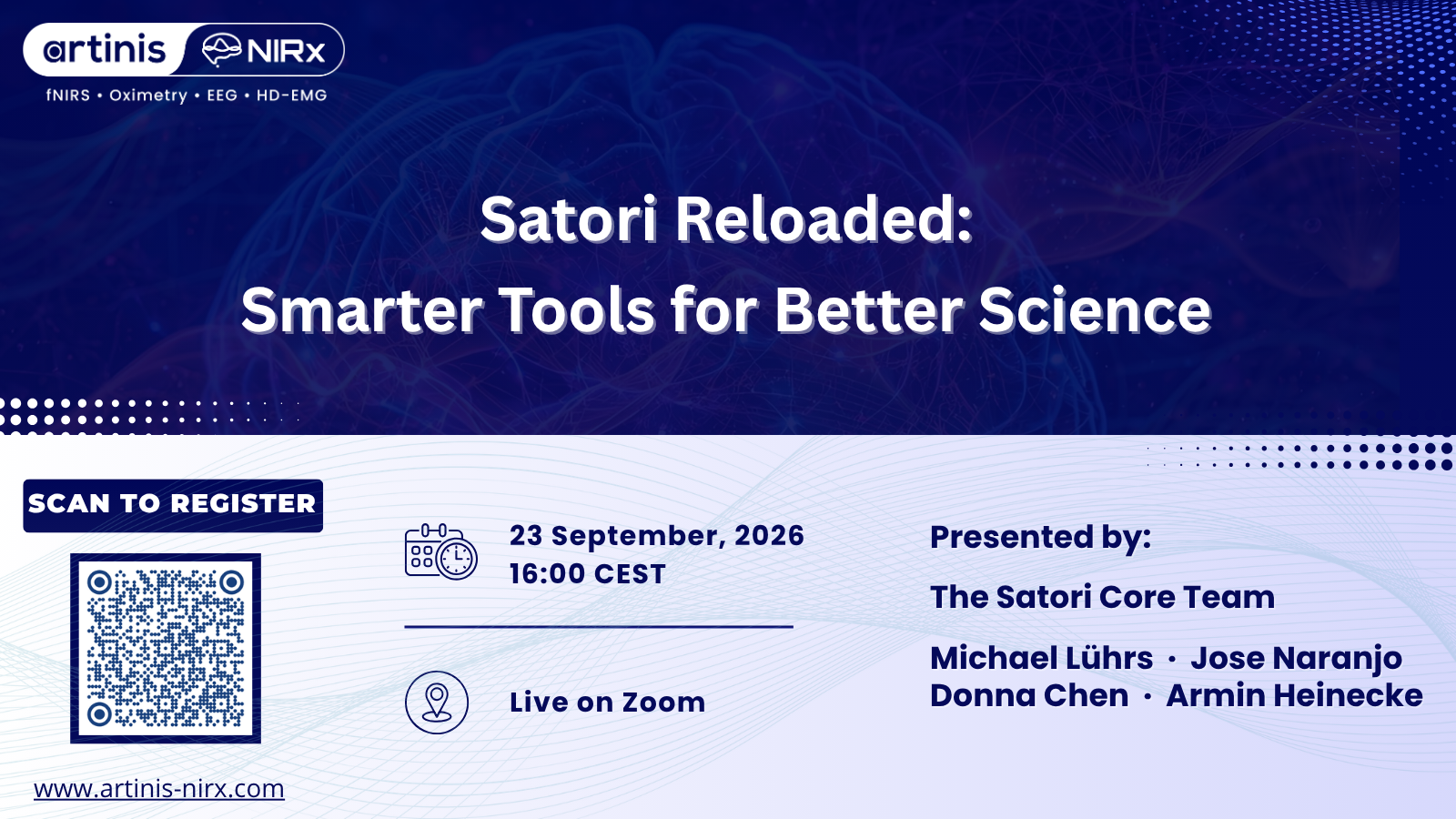
Satori Reloaded: Smarter Tools for Better Science
Date: September 23, 2026
Time: 4 PM CEST
Speakers: The webinar will be presented by the core Satori team - Michael Lührs, Jose Naranjo, Donna Chen, and Armin Heinecke.
Discover the latest advances in fNIRS data analysis with the newly released Satori 2026.
In this webinar, the Satori team will introduce the key capabilities of this major update, designed to make fNIRS analysis faster, more flexible, and more powerful while providing researchers with an expanded set of tools for exploring and interpreting their data.
At the center of Satori 2026 is the new ANCOVA module, enabling robust and versatile second-level analyses of fNIRS data. The release also introduces significant performance improvements and new analytical and visualization capabilities, including:
Substantial performance and speed optimizations for more efficient data analysis
New analysis methods, including Continuous Wavelet Transform and Wavelet Coherence
Expanded visualization tools for clearer and more intuitive exploration of fNIRS data
Throughout the webinar, the team will showcase these new features and demonstrate how Satori 2026 can help researchers streamline their workflows, explore their data from new perspectives, and take their fNIRS analyses further.
Join us to explore what’s new in Satori 2026 and discover smarter tools for better fNIRS science.
Register here.
Past Webinars
In the Right Light: Evaluating fNIRS Data Quality - NIRx Expert Webinar Series
Speakers:
Dr. Armin Heinecke, NIRx Scientific Support Consultant (SME level)
Giovanni Hering, NIRx Scientific Support Team Lead
In the first part of this webinar, we presented several commonly used quality evaluation metrics applied during the preprocessing of fNIRS data. We focused on the advantages and limitations of each measure, as well as the added value of combining multiple metrics. We also demonstrated how these measures are implemented in the Satori fNIRS analysis software and how they can be effectively reported in scientific publications.
In the second part, we showcased the use of these metrics across multiple sample datasets from open-access publications, covering a range of manufacturers, populations, and applications. We further discussed approaches for comparing these metrics and highlighted common pitfalls in their interpretation.
Part 1: Watch the webinar here.
Part 2: Watch the webinar here.
Modeling Brain Signals Better: Introducing HRfunc for fNIRS
Speaker: Denny Schaedig, Neuroimaging Engineer, Laboratory for Child Brain Development, Washington University in St. Louis, School of Medicine
In this webinar, Denny Schaedig introduced the HRfunc tool and demonstrated how it can be used to estimate neural activity and hemodynamic response functions in fNIRS data.
To highlight the benefits and drawbacks of using HRfunc, we walked through two standard neuroimaging analyses and examined how HRfunc impacted analysis outcomes compared to standard hemoglobin-based analyses.
Throughout the session, we guided participants through a live demo focused on modeling hemodynamic response variability, estimating neural activity, and communicating estimated HRFs using the HRfunc tool.
When High-Density fNIRS Matters: Comparing Sparse and HD Arrays Across Stroop Task Conditions
Speaker: Jessie Anderson,PhD Candidate | Biomedical Engineering, Zaman lab, Boas Lab, Boston University
As fNIRS technology has advanced, researchers have increasingly explored high-density (HD) optode arrangements for their potential to improve signal quality and spatial precision. But does a denser array always lead to better data—and if so, in what ways?
In this webinar, the speaker discussed her recent publication titled “High-density multidistance fNIRS enhances detection of brain activity during a word-color Stroop task,” which presented a direct comparison of an HD array and a sparse array in both channel and image space during a dual-condition Stroop task. The talk covered experimental design, data processing, statistical comparisons of array performance, and shared resources (array layouts, Stroop paradigm, and datasets), offering practical guidance for selecting array configurations based on study goals and cognitive load.
Key findings included the HD array’s overall superior detection, localization, and suitability for image reconstruction, while also demonstrating that sparse arrays remained effective for detecting strong activation patterns in channel space. These results underscored that the optimal array design depended on both the research question and the level of analysis.
Detecting Learning Disorders by Extracting Heart Signals from NIRS
Speaker: Nicolás J. Gallego-Molina, Research Fellow BioSIP group, University of Málaga.
This webinar presented a novel approach for detecting learning disorders by extracting heart rate variability (HRV) from functional near-infrared spectroscopy (fNIRS) signals. By integrating physiological and cerebral measurements, the method enabled explainable detection of cognitive impairments through machine learning.
The session explored the underlying signal processing techniques, experimental setup, and key findings, highlighting the potential of fNIRS as a dual-purpose tool for both brain and cardiovascular monitoring in educational and clinical settings.
iTBS and fNIRS Integration: from Experiment to Data Preprocessing
Speakers: Jin Minxia and Xia Weili - PhD candidates, Department of Rehabilitation Sciences, Hong Kong Polytechnic University
In this webinar, Mr. Xia Weili and Ms. Jin Minxia addressed the practical challenges they encountered in concurrent fNIRS/TMS studies and presented their solutions. They outlined the basic data preprocessing and statistical analysis methods and shared preliminary findings on the effects of TMS-induced muscle contractions on fNIRS data.
From Coil to Circuit: Using Imaging to Map and Optimize TMS Effects
Speaker: Dr. Georg Kranz, Associate Professor, Department of Rehabilitation Sciences, Hong Kong Polytechnic University
In this webinar, Dr. Kranz provided an introduction to non-invasive brain stimulation (NIBS), with a particular focus on transcranial magnetic stimulation (TMS). He outlined the fundamentals of TMS and repetitive TMS (rTMS), reviewed their established and emerging applications in psychiatry, and compared different treatment protocols in light of recent approaches and clinical guidelines.
The talk then highlighted the integration of TMS with fNIRS, discussing both the challenges and advantages of the simultaneous application of the two techniques. Dr. Kranz concluded by presenting recent findings from his group that explored the potential clinical impact of these combined methods.
Going beyond Satori: Extending your data visualization and analysis capabilities
Speaker: Dr. Armin Heinecke, NIRx Scientific Support Consultant
A key feature of Satori is the ease of access to all properties of the data as well as the option to effortlessly export your data and results. This approach empowers users to expand their analysis beyond the Satori platform.
Our webinar offered detailed insights into Satori’s export options, along with an overview of external analysis possibilities using Python, MATLAB, and various statistical software tools.
Aurora recording software: v2025.2 refresher webinar
Speaker: Marina Sazhumyan, PhD candidate in Computational Neuroscience, Scientific Consultant NIRx
A walk through of existing and new features in Aurora, the NIRSport2 data acquisition software. Emphasis was placed on the new features introduced since the 2021.04 release, followed by a live demonstration of signal optimization and recording features.
Advancing Neonatal Brain Health with Bedside fNIRS: From Acquisition to Clinical Impact
Speaker: Dr. Emma Duerden, Canada Research Chair in Neuroscience & Learning Disorders and Associate Professor at Western University.
This webinar examined how bedside fNIRS can be used for continuous, non-sedated monitoring of brain function in healthy and critically ill neonates. Dr. Emma Duerden discussed optimized acquisition protocols, training implementations in clinical settings, and the development of fNIRS-based biomarkers for brain maturation and injury.
The session highlighted key findings from over 250 neonatal scans, demonstrating how fNIRS connectivity measures can support early diagnosis, injury stratification, and future neuroprotective trials in neonatal care.
Exploring Neural Efficiency in Spatial Cognition: A Comparative Study of 3D Visual Stimuli in Virtual Reality Across STEM and Non-STEM Fields
Speaker: Dr. Raimundo da Silva S. Junior, Postdoctoral researcher at D'Or Institute for Research and Education (IDOR).
This webinar explored neural efficiency in spatial cognition using virtual reality and fNIRS. Dr. Raimundo da Silva S. Junior presented findings from his comparative study of 3D and 2.5D visual stimuli during mental rotation tasks, highlighting differences in neural efficiency between STEM and non-STEM participants.
The session demonstrated how cost-effective VR setups can be used to objectively assess spatial cognition, showing that both 3D and 2.5D stimuli are effective tools for studying cognitive performance in immersive environments.
Introducing Satori 2.2: Elevate Your fNIRS Workflows
Speaker: Dr. Michael Lührs, Brain Innovation B.V.
This webinar introduced Satori 2.2 and its latest enhancements designed to improve fNIRS workflow flexibility and analytical capabilities. Dr. Michael Lührs presented key new features, including robust regression, advanced physiological predictors, parametric event weighting within the GLM pipeline, and improved workflow and event management tools.
The session highlighted enhanced 3D reporting functionalities and demonstrated how these updates can support more efficient data processing and clearer result interpretation.
The Sweet Spot for Motor Learning: An fNIRS Study in Children with Congenital Limb Loss
Speaker: Jorge M. Zuniga, Ph.D. - Associate Professor, Department of Biomechanics, University of Nebraska Omaha
This webinar explored how prosthetic use influences motor learning and neural plasticity in children with congenital limb loss using fNIRS.
The session presented findings from an 8-week prosthetic home training program, highlighting changes in cortical connectivity and neural efficiency during motor tasks.
Results showed increased interhemispheric connectivity and a 13% improvement in global neural efficiency, providing evidence of use-dependent neuroplasticity and supporting the integration of prosthetic training with neuroimaging-based approaches in pediatric rehabilitation.
NIRxWINGS2 - The next evolution of our biosignal sensor system
Speaker: Dr. Ben Pelzer - Scientific Consultant in Innovation, NIRx
This webinar introduced the NIRxWINGS2 Physiological Sensor Module as a next-generation solution for collecting high-quality fNIRS and peripheral physiological data. The session outlined how the system can support both clean fNIRS signal acquisition and research focused on peripheral physiology.
During the webinar, the speaker described the new features and underlying technology of NIRxWINGS2, demonstrated hands-on device setup and usage, and discussed various ways in which NIRxWINGS2 data can support advanced and cutting-edge fNIRS research.
Systematic review of resting-state functional near-infrared spectroscopy in neurodegenerative diseases
Speaker: Franziska Albrecht, Assistant Professor, Karolinska Institutet, Stockholm
This webinar presented a systematic review of resting-state fNIRS applications in neurodegenerative diseases. Franziska Albrecht reviewed evidence of altered resting-state brain activity compared to healthy controls and discussed current methodological challenges across studies.
The session highlighted the potential of rs-fNIRS as a research tool while emphasizing the need for standardized guidelines to improve data consistency and comparability in neurodegenerative research.
Measuring Brain Activity During Functional Movements - Why fNIRS is an Optimal Neuroimaging Tool for Rehabilitative Neuroscientists
Speaker: Jaclyn Stephens, PhD., Associate Professor and Director of the SCORE Lab at the Department of Health and Exercise Science, Colorado State University.
In this webinar, Dr. Stephens described how portable fNIRS has enabled the evaluation of the neural underpinnings of functional movements such as treadmill walking and dual-task performance. She presented the protocols she has developed, along with preliminary data, and discussed the current limitations of movement-based protocols as well as future research goals.
Evaluating Intervention-Induced Change in Neurophysiology and Balance in Adults with Acquired Brain Injury
Speaker: Jaclyn Stephens, PhD., Associate Professor and Director of the SCORE Lab at the Department of Health and Exercise Science, Colorado State University.
This webinar featured a journal club–style discussion of the recently published paper “Intervention-Induced Changes in Balance and Task-Dependent Neural Activity in Adults with Acquired Brain Injury: A Pilot Randomized Controlled Trial.”
Dr. Stephens, the senior author on the project, shared fNIRS-specific highlights from the pilot randomized controlled trial and discussed key challenges and lessons learned when applying fNIRS in a clinical population, presented in an interactive format.
Uncovering Hidden Consciousness in the ICU: The Role of fNIRS in Brain Injury Care
Speaker: Dr. Karnig Kazazian completed his PhD at Western University under the supervision of Dr. Adrian Owen and Dr. Teneille Gofton. His research focuses on advanced brain imaging techniques, including functional MRI and fNIRS, to improve the detection of consciousness and the prediction of recovery in critically ill patients following severe brain injury.
This webinar explored how fNIRS can be used to detect hidden consciousness in ICU patients with severe brain injuries. Dr. Karnig Kazazian discussed recent advances in fNIRS research, demonstrating how brain network activity and task-based responses can reveal preserved awareness in patients who appear unresponsive.
The session highlighted clinical, ethical, and practical implications of integrating fNIRS into critical care, emphasizing its potential to improve diagnosis, patient management, and individualized treatment strategies in the ICU.
Personalized EEG/fNIRS promoting fNIRS optimal probe design and advanced diffused optical tomography within NIRSTORM package: applications in sleep and epilepsy studies.
Speaker: Christophe Grova PhD, Professor in the Department of Physics of Concordia University and a research member of Concordia School of Health (PERFORM center)
This webinar introduced new fNIRS methods implemented in NIRSTORM, a Brainstorm plugin for fNIRS data analysis, enabling three-dimensional visualizations and interactive exploration of multi-channel signals.
Professor Grova presented his algorithm for optimal fNIRS montage design, which enhanced sensitivity to targeted brain regions and enabled dense montages for local 3D reconstructions. The session included examples of freely placed optodes as well as high-density cap configurations.
In addition, the webinar covered advanced 3D reconstructions of hemoglobin changes on the cortical surface using Maximum Entropy on the Mean (MEM) to solve inverse problems. These methods were applied to combined EEG/fNIRS recordings in sleep and epilepsy studies.
Photogrammetric fNIRS optode registration on the head with the Cedalion toolbox: A tutorial
Speakers: Dr. Alexander von Lühmann and Dr. Eike Middell, members of the independent research group “Intelligent Biomedical Sensing (IBS)” at BIFOLD, Machine Learning Dept, TU Berlin.
In contrast to EEG, the relatively high spatial resolution of fNIRS makes precise localization of optodes on the head a critical factor for the accuracy and repeatability of fNIRS studies. Over recent years, multiple publications have demonstrated the feasibility and benefits of using photogrammetry to determine optode placement quickly and accurately relative to anatomical landmarks.
In this webinar, the speakers presented a photogrammetry-based solution implemented at the Intelligent Biomedical Sensing (IBS) Lab within the open-source, Python-based toolbox Cedalion. Dr. Alexander von Lühmann and Dr. Eike Middell demonstrated the typical workflow, guiding participants through the key steps required to adopt or reproduce the method for accurate fNIRS optode registration.
Spatio-temporal tomography of the brain: the DOT-EEG fusion algorithm and the new NIRFASTer
Speaker: Dr. Jiaming Cao, Research Fellow at University of Birmingham. His research mainly focuses on advancing algorithms for high-speed, high-accuracy diffuse optical tomography.
In the first part of the webinar, Dr. Cao presented a novel algorithm that synthesizes simultaneously recorded diffuse optical tomography (DOT) and EEG signals to enable high spatio-temporal resolution neuronal source reconstruction. He discussed the design of the algorithm and its validation through a retinotopy experiment conducted using a NIRx NIRSport2 system.
In the second part of the session, Dr. Cao introduced his ongoing work on an updated version of NIRFASTer, a widely used photon forward modeling software. The new version was presented as Python-based and significantly faster. A compact version had already been made available and integrated into the Cedalion toolbox.
References: J. Cao, E. Bulger, B. Shinn-Cunningham, P. Grover, and J. M. Kainerstorfer. “Diffuse Optical Tomography Spatial Prior for EEG Source Localization in Human Visual Cortex”. In: NeuroImage (2023), p. 120210. DOI: 10. 1016/j.neuroimage.2023.120210.
Towards more inclusive fNIRS research: Developing best practices for scanning participants with afro-textured hair
Speakers: Abria Simmons, senior at the University of Maryland College Park, majoring in Psychology and minoring in Human Development and Gavkhar Abdurokhmonova, 3rd year PhD student in the Human Development program at the University of Maryland, College of Education.
This webinar addressed the long-standing exclusion of Black participants from neuroimaging research by presenting practical, inclusive solutions for fNIRS data collection with afro-textured hair. The speakers shared best practices developed at the LEAD Lab, including participant-centered workflows and hands-on techniques to improve sensor–scalp contact.
The session highlighted both methodological and relational approaches to increasing representation and equity in fNIRS research.
E-Prime Extension for NIRx - Optimize E-Prime for NIRx fNIRS systems
Speakers: Franziska Keller, NIRx Scientific Consultant and Kimberly Barone & Gretchen Brauch from PST
This webinar introduced the E-Prime Extension for NIRx, a collaborative development between PST and NIRx designed to streamline experiment integration with NIRx fNIRS systems. The speakers presented key features of the extension, explaining how it enables seamless communication between E-Prime experiments and NIRx hardware. A live demonstration showcased practical use cases, highlighting how the extension simplifies experimental setup, improves synchronization, and optimizes fNIRS data collection workflows.
Beyond the Lab: fNIRS Imaging from Classrooms to Rainforests
Speaker: Prof. Dan Dewey, serves as the Department Chair of Linguistics and directs the fNIRS Applied Linguistics Lab at Brigham Young University
This webinar explored the use of fNIRS beyond traditional laboratory environments, highlighting its application in real-world settings ranging from classrooms to remote rainforest locations. Prof. Dan Dewey shared practical experiences demonstrating the strengths of fNIRS, including portability, tolerance to movement, non-invasiveness, ease of use, and suitability for large-scale hyperscanning.
The session also addressed logistical and environmental challenges such as limited infrastructure, Wi-Fi interference, extreme climate conditions, and working with indigenous communities.
Overall, the webinar illustrated how fNIRS enables ecologically valid, on-site, real-time neuroimaging in diverse and unpredictable research contexts.
Simplifying machine learning for fNIRS: implementation and benchmarking with BenchNIRS
Speaker:Johann Benerradi, a researcher in neuroinformatics at the University of Cambridge, currently working on the Brain Imaging for Global Health (BRIGHT) Project. He obtained his PhD in Computer Science from the University of Nottingham. His research focuses on neuroimaging data analysis and machine learning for fNIRS, with applications ranging from the study of neurodevelopment to brain-computer interfaces.
This webinar addressed key challenges in applying machine learning to fNIRS data, including model implementation, optimization, and—critically—rigorous evaluation of generalization performance on unseen data. Johann Benerradi introduced the BenchNIRS Python framework as a practical solution for simplifying machine learning workflows in fNIRS research, from model fine-tuning to standardized performance assessment.
The session also presented a large-scale case study in which BenchNIRS was used to benchmark popular machine learning models across multiple open-access fNIRS datasets, tasks, and paradigms.
Overall, the webinar provided valuable methodological guidance for researchers aiming to apply machine learning reliably in neuroimaging and brain–computer interface applications.
Full paper: Benerradi, J., Clos, J., Landowska, A., Valstar, M. F., & Wilson, M. L. (2023). Benchmarking framework for machine learning classification from fNIRS data. Frontiers in Neuroergonomics, 4, 994969.
Demo link: https://colab.research.google.com/drive/1nRyrSipkDpkor-7qh8kCv8vCbpHLp6IN
Homepage of the project: https://hanbnrd.gitlab.io/benchnirs/
An assessment of baseline-corrected averaging, general linear model (GLM) and multivariate pattern analysis (MVPA) based approaches to analyse fNIRS infant data
Speaker: Dr. Filippetti is currently a Senior Lecturer (Associate Professor) in the Department of Psychology at the University of Essex, where she is also part of the Essex Babylab. Her research combines behavioural and psychophysiological methods to study the role of multisensory integration in how infants learn about their bodies.
This webinar examined and compared multiple analytical approaches for infant fNIRS data, including baseline-corrected averaging, univariate General Linear Model (GLM) analysis, and Multivariate Pattern Analysis (MVPA).
Dr. Maria Laura Filippetti presented a registered report applying both traditional and machine learning–based methods to fNIRS data collected from 30 infants aged 4–6 months during a face inversion paradigm. The session highlighted how different analysis strategies can lead to converging or diverging conclusions regarding neural responses to upright versus inverted face stimuli. By directly contrasting standard and multivariate approaches, the webinar provided practical guidance for researchers selecting appropriate analysis methods for infant fNIRS studies.
Link to the registered report: Filippetti, M. L., Andreu-Perez, J., de Klerk, C., Richmond, C., & Rigato, S. (2023). Are advanced methods necessary to improve infant fNIRS data analysis? An assessment of baseline-corrected averaging, general linear model (GLM) and multivariate pattern analysis (MVPA) based approaches. NeuroImage, 265, 119756.
Multi-modal Integration of Simultaneous fMRI and fNIRS Signals: From Protocol Development to Data Preprocessing
Speaker:Sara Sanchez-Alonso, Associate Research Scientist at the Child Study Center at Yale School of Medicine, US.
This webinar provided a comprehensive overview of methodological challenges and practical considerations involved in the simultaneous acquisition of fMRI and fNIRS data.
Sara Sanchez-Alonso presented a protocol enabling whole-head fNIRS coverage during fMRI scanning, incorporating short-distance channels for regression of systemic physiological signals and two approaches for optode-to-scalp co-registration.
The session addressed adaptations required for operating fNIRS equipment in the MR environment and offered recommendations for data recording and co-registration workflows. In addition, key preprocessing and analysis steps for jointly collected fMRI and fNIRS data were discussed, along with guidance on modifying the protocol to accommodate different MR-safe fNIRS systems.
Modality Fusion: EEG-fNIRS Convergence for a Deeper Dive into Auditory Processing
Speaker: Dr. Yalda Shahriari,Associate Professor of Biomedical Engineering and the director of NeuralPC Lab at the University of Rhode Island, US.
This webinar explored the integration of EEG and fNIRS as a multimodal neuroimaging approach to gain deeper insights into auditory processing.
Dr. Yalda Shahriari discussed the complementary strengths of EEG and fNIRS, highlighting their affordability, portability, and suitability for simultaneous acquisition compared to traditional imaging methods such as fMRI. The session presented research findings demonstrating the value of examining nonlinear interactions between EEG and fNIRS signals, as well as the use of multi-view methodologies for EEG signal classification.
Overall, the webinar showcased how combining EEG and fNIRS can improve the characterization and classification of neural responses during auditory tasks, underscoring the potential of modality fusion in cognitive and perceptual neuroscience.
Two-Part Webinar with Dr. Pascal Vrticka
Dr. Pascal Vrticka is a social neuroscientist and Associate Professor in Psychology at the University of Essex (Colchester, UK), where he also is the PI of the Social Neuroscience of Human Attachment (SoNeAt) Lab.
The SoNeAt Lab is pioneering a new area of research investigating the neurobiological basis of human attachment - the social neuroscience of human attachment (SoNeAt). This includes the description of the first functional neuroanatomical models of human attachment, both organized (i.e., secure, insecure-avoidant and insecure-anxious; NAMA) and disorganised (NAMDA).
One current focus of SoNeAt Lab's research is devoted to biobehavioral and particularly interpersonal neural synchrony (INS) acquired by means of functional near-infrared spectroscopy (fNIRS) hyperscanning. Together with many international collaborators and as part of the CARE studies, Dr. Vrticka has published several high-impact peer-reviewed papers on parent-child INS including both fathers and mothers, in addition to providing A Guide to Parent-Child fNIRS Hyperscanning Data Processing and Analysis comprising free sample data and code. A freely available introduction to fNIRS hyperscanning can furthermore be found on Dr Vrticka's website.
Part I - fNIRS Hyperscanning: Underlying Theory and Experimental Design
Part II - fNIRS Hyperscanning – Practical Considerations for Data Analysis
devfOLD: A Toolbox for Designing Age-Specific fNIRS Channel Placement
Speaker: Dr. Xiaoxue Fu, Assistant Professor in the Department of Psychology at the University of South Carolina (USC). She shared with us her study conducted together with John E. Richards on devfOLD toolbox.
This webinar introduced devfOLD, a toolbox designed to support age-specific optimization of fNIRS channel placement for developmental research.
Dr. Xiaoxue Fu presented how devfOLD extends the existing fOLD framework by incorporating realistic head models spanning ages from 2 weeks to early adulthood, enabling probabilistic channel-to-ROI mapping across development. The session highlighted limitations of adult-based channel optimization methods and demonstrated how age-specific photon propagation simulations improve sensitivity to targeted brain regions of interest. Results illustrated both consistencies and differences in channel-to-ROI correspondence across infant, child, and adult age groups.
Overall, the webinar emphasized the importance of age-appropriate head models for accurate cortical localization and effective fNIRS study design.
The devfOLD toolbox is publicly shared - https://github.com/nirx/devfOLD
Full paper: Fu, X., & Richards, J.E. (2021). devfOLD: A Toolbox for Designing Age-Specific fNIRS Channel Placement. Neurophotonics. 8(4) 045003.
Disrupted inter-brain synchronization between alcohol use disorders and its neural mechanism
Speaker:Mr. Lei Guo, Ph.D. candidate and member of the addiction study group at the Jiao Tong University, School of Medicine in Shanghai, China.
This webinar presented recent fNIRS hyperscanning research investigating inter-brain synchronization in individuals with alcohol use disorder (AUD).
Mr. Lei Guo discussed findings from a study comparing neural synchronization during social interaction between participants with AUD and healthy controls. Results revealed reduced inter-brain synchronization in the right middle frontal cortex in the AUD group, indicating impairments in social cognition. Moreover, decreased synchronization was associated with higher levels of impulsivity. The findings offer valuable insights into the neural mechanisms underlying social dysfunction in AUD and highlight potential targets for future intervention strategies.
Aurora Release Webinar
Speakers: Giovanni Hering, NIRx Scientific Consultant Team Lead & Dr. Robert Franke, NIRx Software Development Team Lead.
This webinar introduced the latest release of Aurora, NIRx’s data acquisition software, highlighting new features designed to further support high-density (HD-DOT) fNIRS recordings with the NIRSport2 system.
The session covered two major feature updates, along with several interface improvements and bug fixes.
NIRx experts provided a walkthrough of the new functionalities and demonstrated how they are implemented within the software, offering practical guidance for researchers looking to optimize their HD-fNIRS workflows.
Satori 2.0 Webinar - Discover the new features of the innovative fNIRS analysis software
This webinar introduced Satori 2.0, showcasing new and enhanced features developed in response to feedback from the fNIRS research community.
The session highlighted four key additions—Python integration, an interactive data plotter, integrated user guides, and updated graphical user interface elements—designed to streamline data preprocessing and analysis workflows.
Presented by NIRx Scientific Consultant Team Lead Jeremy Burnison and Dr. Michael Lührs from Brain Innovation, the webinar provided an overview of how these updates improve usability, flexibility, and analytical efficiency for fNIRS researchers.
The use of Heart Rate Responses Extracted From Functional Near-Infrared Spectroscopy Data as a Measure of Speech Discrimination Ability in Sleeping Infants
Speaker: Onn Wah Lee, PhD
Onn Wan Lee conducted his study at the Bionics Institute and the University of Melbourne in Australia under the supervision of Prof. Colette McKay and Dr. Julia Wunderlich.
This Journal Club webinar presented research on using heart rate responses extracted from fNIRS data as an indicator of speech discrimination ability in sleeping infants.
Onn Wah Lee, discussed a novel method for deriving heart rate information from fNIRS recordings collected from infants aged 2–10 months. The study demonstrated that heart rate responses were systematically modulated by a habituation/dishabituation paradigm and showed significant adaptation over the course of the session. These findings highlight the potential of fNIRS-derived physiological signals as a complementary measure for assessing early auditory and speech processing in infancy.
Performance comparison of systemic activity correction in functional near-infrared spectroscopy for methods with and without short-distance channels
Speaker: Franziska Klein, PhD
Franziska Klein received her Ph.D. in 2022 at the University of Oldenburg. Her research focus lies in the development and validation of fNIRS-based real-time applications such as neurofeedback and BCI as well as in the improvement and further development of signal processing techniques. Since 2022 she has also worked at the University Hospital RWTH Aachen where she transfers her experience and knowledge to clinical applications.
This webinar compared methods for correcting extracerebral systemic artifacts in fNIRS data, focusing on approaches with and without short-distance channels.
Dr. Franziska Klein presented a performance evaluation of five correction techniques using both semi-simulated data and real motor task recordings.
The session highlighted the challenges of systemic contamination and discussed the effectiveness of short-distance channels, offering practical guidance for improving fNIRS signal quality in research and clinical applications.
NIRx Webinar with Julie Tremblay: Introduction to the LIONirs toolbox: a freely accessible fNIRS data analysis tool
Design for fNIRS data analysis, LIONirs toolbox includes several functions to read, preprocess, and analyze fNIRS data, including task-based and functional connectivity measures. In this webinar, we introduce the basics of how to start with a data set and create a pipeline of data analysis. Several examples of data analysis and a short hands-on will be presented to show how to use data decompositions methods PCA and PARAFAC to reduce data artifacts.
Watch the webinar here.
Satori - New Advancements and Features by Brain Innovation and NIRx
The concept of Satori is to make fNIRS analysis straightforward to all our users. The software includes the most popular processing and statistical tools, with the aim of looking at your data at every step. You will have total control over your analysis without having to program a single line.
We have been continuously developing and improving Satori since its launch last year. In this live webinar, NIRx and Brain Innovation share new features available in the latest version of Satori.
NIRx Journal Club with Anneke Hamann: Investigating mental workload-induced changes in cortical oxygenation and frontal theta activity during simulated flights.
In aviation research, valid and reliable physiological assessment of human performance is of interest for aspects of training and adaptive assistance systems. In their study, they used concurrent fNIRS-EEG measurement to analyze the effects of stepwise increased mental workload on cortical activation in a simulated flight task while controlling for mental fatigue. Their findings suggest higher cortical activation with higher task demands and different sensitivity of fNIRS and EEG to different demand levels, thus illustrating the benefit of combined measurement for mental workload assessment.
Satori, innovative fNIRS analysis software - new features with Dr. Michael Lührs
Since the release of Satori in October last year many exciting new developments were made. In this webinar, we will provide you with an overview of these new features and give an outlook on upcoming highlights. In addition, we will show you how you can use Satori to analyze your data and get many important insights from quality assurance over preprocessing to the final analysis.
Cortical correlates of pain relief: A NIRx Journal Club with Dr. Benedict Alter
Dr. Alter discusses his recent study examining fNIRS-measured brain activity during top-down inhibition of pain, a model of pain relief (https://journals.sagepub.com/doi/full/10.1177/17448069221074991). In volunteers, pain inhibition is associated with right dorsolateral prefrontal cortex activation and relative deactivations of bilateral medial prefrontal cortex and somatosensory cortex. This and work from others highlight a promising role for fNIRS in pain research.
Optimizing fNIRS Signal Quality with NIRx Support
How do you check, troubleshoot and optimize fNIRS signal quality to ensure the best signal for your research? In this webinar, we go through just that! This is the release of our latest video, available on our Support Site, plus a live Q&A with our expert support staff.
In Part 1, Demetris takes us through how to assess signal quality. Part 2 shows how to troubleshoot the challenges when things are less than perfect. These two sections follow the Signal Quality Guidelines, available as a PDF on our Support Site. In Part 3, with the help of our colleagues, we show a real-time example of set up, checks, and troubleshooting.
Effect of Physiology on Mapping Resting State Networks Using fNIRS - Challenges and Considerations with Sergio Novi and Androu Abdalmalak
In this webinar, Androu Abdalmalak and Sergio Novi discussed their recent publication titled " Effects of Systemic Physiology on Mapping Resting-State Networks Using Functional Near-Infrared Spectroscopy". This work investigates the effects of systemic physiological noise on extracting resting-state networks with fNIRS. In the first part of this webinar, Androu explained the importance of extracting meaningful resting-state networks at the single-subject level, particularly as it pertains to their ongoing research aimed at using fNIRS to predict outcomes in patients with acute brain injuries.
In the second part, Sergio focused on the methodological challenges when incorporating additional physiological measurements in the fNIRS analysis pipeline.
The Neuroergonomics of Exercise and Neuromuscular Fatigue in Older Adults: lessons from fNIRS - with Oshin Tyagi
The cortex and motor areas of the brain are responsible for voluntary muscle control, and determination of the “safe limit” of exercise performance. Moreover, neuromuscular performance in older adults is exacerbated under stress and is characterized by shorter endurance time, greater perceived effort, lower force steadiness, and higher electromyographic activity. But the neural mechanisms of exercise under stress are not well understood.
In this talk, Oshin explored the neural correlates of exercise and how stress influences these correlates. For this, they used effective connectivity, which quantifies the influence of one brain region over the other, to understand how the prefrontal and motor areas of the brain influence each other during exercise performance under stress.
fNIRS and Heart Rate Variability During Self-Compassionate Thinking Related to Stressful Memories with Paulo Bazán
He discussed his fNIRS research into self-compassionate thinking related to stressful memories and the recent paper he is co-author of.
dos Santos, F. R., Bazán, P. R., Balardin, J. B., de Aratanha, M. A., Rodrigues, M., Lacerda, S., ... & Kozasa, E. H. (2021). Changes in Prefrontal fNIRS Activation and Heart Rate Variability During Self-Compassionate Thinking Related to Stressful Memories. Mindfulness, 1-13. https://link.springer.com/article/10.1007/s12671-021-01789-0
Image Reconstruction in fNIRS with Dr. Ted Huppert
In this webinar, Dr. Ted Huppert talked about how to perform image reconstruction and use digitization information in the Brain AnalzyIR toolbox.
Image reconstruction is one of the most important topics in neuroimaging. It gives more information about where the measured signal is coming from and helps with the correct interpretation of the dataset.
Physiological Considerations of Employing a Multimodal Imaging Protocol: Pitfalls, Methodological Advancements, and Future Directions for fNIRS research - Joel Burma
In this talk, Joel Burma of the Cerebrovascular Concussion Laboratory/Experimental Imaging Centre at the University of Calgary, talks about using fNIRS multimodal imaging. The concurrent use of physiological sensors in fNIRS experiments has grown in recent years. In this open webinar Joel discusses pitfalls, methodological advancements, and future directions for multimodal research using fNIRS + physiological measurements.
High Density fNIRS - A two part Webinar Series with Dr. David Boas
Dr. David Boas shared with us his expert knowledge on the topic of High-Density fNIRS (HD-fNIRS / DOT). HD-fNIRS is a methodology that employs high-density arrays with short, medium and long channels. Overlapping measurements with multiple source-detector distances can improve spatial resolution, depth and lateral specificity, and can enable the tomographic (image) reconstruction of cerebral activation.
In this two part webinar series, we went full circle of HD fNIRS: From practically setting up, conducting, and analyzing HD-fNIRS experiments using Dr. Boas' open source fNIRS analysis toolboxes AtlasViewer and Homer3 together with NIRx' NIRSport2 systems and Aurora/NIRSite software.
Part 1 covered experimental set up and data collection. Dr. Boas explained how to design a HD optode array using AtlasViewer. Then we addressed how to take those probes (.snirf) into NIRSITE and how to perform a straight-forward HD fNIRS measurement with the NIRSport2 system and Aurora.
Part 2 Dr. Boas described the analysis of the HD fNIRS data acquired with the NIRSport2 in Part 1. He showed how to do tomographic image reconstruction in AtlasViewer and trial-based signal analysis in Homer3.
You can download the data set used in Part 2 of the webinar here. Note that this is a large zip file as it also includes all of the results from the Monte Carlo run in AtlasViewer preparing for the image reconstruction. Thus, you will not need to run the Monte Carlo yourself to do the brain and scalp image reconstruction.
Part 1 - Watch the recording here.
Part 2 - Watch the recording here.
fNIRS in Infants - from Data Collection to Preprocessing with Dr. Jessica Gemignani
The talk covered different aspects related to infant studies. It started with an overview of approaches for the design of the optode array, with examples from literature as well as a couple practical examples of tools that can be used to this end. Relatedly, she discussed strategies for anatomical localization of the designed array. Following, the talk, Dr. Gemignani focused on the data pre-processing stage, including the assessment of raw data quality as well as best approaches to design a routine that optimally suits the study characteristics (e.g., number of trials) while accurately recovering the HRF (Gemignani and Gervain 2021).
Group Level Analysis with Dr. Ted Huppert
Dr. Ted Huppert is an Associate Professor from the University of Pittsburgh with more than 65 peer-reviewed publications on brain imaging methodologies. He will be joining us to give a detailed look at Group Level Analysis with fNIRS and practical demonstration in the BrainAnalyzIR, his Matlab based analysis platform. This toolbox is one of the most used fNIRS analysis platforms and was developed by Dr. Huppert and his team.
Satori, a look at the new fNIRS analysis software with Dr. Michael Lührs from Brain Innovation
We are very excited to announce the launch of our new easy-to-use, GUI-based analysis software made in collaboration with Brain Innovation. Brain Innovation have been our partners in the established real-time analysis software Turbo-Satori. The webinar will give you an overview of the main features of Satori, from standard fNIRS processing methods to statistical tools and data visualization.
Objective Measurements of Tinnitus using fNIRS with Dr. Mehrnaz Shoushtarian
For this webinar we were pleased to welcome Dr. Mehrnaz Shoushtarian of the Bionics Institute, Melbourne to talk about objective measurements of tinnitus. Chronic tinnitus, hearing sounds that are not present externally, affects around 1 in 8 individuals and can severely impact their quality of life. Rates of tinnitus increase with age and are expected to further rise in the future due to increasing noise exposure among young people.
Despite its wide prevalence, there is currently no objective way to determine the presence or severity of tinnitus or assess whether treatments are effective. Lack of an objective measure remains a significant hurdle to the development of treatments for this condition. They are working to develop an objective measure of tinnitus using functional near-infrared spectroscopy. This talk will present some of their work to date.
An introduction to fNIRS analysis using MNE with Dr. Robert Luke: Part 1 and 2
Dr. Robert Luke spoke in a 2 part series about fNIRS analysis using MNE. MNE is an open-source Python package for exploring, visualizing, and analyzing human neurophysiological data. The first webinar held 30th June 2021 included an introduction to MNE, the ecosystem of packages, installation, and an overview of basic analysis. You can watch it here. In the second webinar, Dr. Luke will dove deeper into fNIRS analysis with MNE including GLM and group-level analysis. You can watchpart 2 here.
NIRx Journal Club: Best Practices in fNIRS with Dr. Meryem Yücel
For the first of the open webinars in Journal Club format, we were pleased to welcome Dr. Meryem Yücel to talk about the recently released paper on best practices in fNIRS. With the rapid growth and the diversification of research methods in fNIRS studies, some inconsistencies are appearing in the way in which methods are presented, which can make the interpretation and replication of studies unnecessarily challenging.
A representative group of leaders in the field of fNIRS (including Dr. Yücel) was assembled by the Society for Functional Near-Infrared Spectroscopy to build a consensus on the best practices for describing the methods utilized in fNIRS studies. Their "paper has been designed to provide guidelines to help enhance the reliability, repeatability, and traceability of reported fNIRS studies and encourage best practices throughout the community."
Hyperscan: The hyperscanning feature for NIRSport2 + Aurora
Hosted by NIRx support staff Blanca Pérez-Sempere and Dr. Mahipal Choudhary
To efficiently collect fNIRS data from multiple subjects simultaneously with the NIRSport2 platform, NIRx is proud to offer Hyperscan, a standalone application that can control the functionality of multiple instances of Aurora from a single interface. The purpose of this webinar is to get users acquainted with the use of this application.
Hyperscan offers great flexibility in terms of recording connection, number of NIRSport2 devices and the optode count and montage layout for individual subjects. After the theoretical introduction to these features, we show an example experiment to give a demonstration of Hyperscan in action. This webinar was hosted by our expert support team.
Optimal Probe Placement in fNIRS Research
Guest Lecturer: Prof. Dr. Rickson Mesquita
Reproducibility of results is one of the keystones in science and, in fact, is what makes science advanced over the centuries. The search for high reproducibility of the same experimental protocol across different sessions is particularly critical for longitudinal studies in functional neuroscience and in different clinical applications, so that one can unentangle the variability caused by systematic errors due to instrumentation/protocol from the intrinsic variability due to the research question. Specifically for fNIRS studies, we have found several contributors to systematic errors over the past ten years, such as motion artifacts, extra cortical contamination and global systemic physiology. More recently, we have found that the lack of spatial information of the optodes on the head can also introduce a major confounding source to the results and lead to misinterpretation of data. In this talk we will discuss the major problems that contributes to systematic errors in fNIRS, and present recent solutions we implemented to reduce variability in fNIRS protocols - including the integration of a real time neuronavigator system to guide probe placement of optodes in fNIRS.
fNIRS In Epilepsy: From Research To Clinic
Guest Lecturers: Dr. Anne Gallagher, Phetsamone Vannasing, and Alejandra M. Hüsser
In this webinar, a team of three scientists of the LIONlab, Université de Montréal, Dr. Anne Gallagher, Phetsamone Vannasing and Alejandra Hüsser, will discuss the value of simultaneous fNIRS and EEG acquisition in patients with epilepsy. They will describe different applications of combined fNIRS-EEG evaluations in research as well as the integration of fNIRS-EEG into the pre-surgical assessment protocol of patients with severe epilepsy. The particularities, challenges and solutions for the installation and data acquisition of a multimodal fNIRS set-up in young patients will be discussed. We will conclude with a preview of potential pathways for multimodal data analysis using LIONirs toolbox.
fNIRS in a different light: a webinar
Guest Lecturer: Dr. Felipe Orihuela-Espina
Part narrative, part mathematics, this webinar is about uniqueness of Dr. Orihuela-Espina’s research in fNIRS. He will review some of his research in fNIRS analysis and interpretation, with computational approaches unorthodox to the field. This will be in the context of three peculiarities; a computer science background, research in a developing country, and unconventional research interests. We shall visit the beauty of manifolds, explore different theories of causal analysis, and envision the automation of our research analysis pipelines by means of knowledge representation.
Short channels analysis in the AnalyzIR toolbox
Guest Lecturer: Dr. Hendrik Santosa
In this webinar, Dr. Santosa will quantitatively compare the performance of several techniques in fNIRS analysis including spatial and temporal filtering, regression, component analysis, and the use of short-separation measurements as the part of the AnalyzIR toolbox. Dr. Santosa is a research instructor in the Department of Radiology at the University of Pittsburgh. His research interest includes statistical method, brain-computer interface, hyperscanning, advance brain signal processing, and multimodal neuroimaging techniques.
Cognitive load assessment in surgeons brain and skill acquisition in surgical training
Guest lecturers: Dr Daniel Richard Leff and Dr. Harsimrat Singh
Technical skills are a critical component of every surgeon. The early assessment of the learning curve of surgical skills can help assess the efficacy of training and adapt it to individual needs. How do we consistently assess the cognitive strain on surgeons during surgeries? Can strategies be developed to help trainees and surgeons cope with excessive cognitive load in the operating theatre? These topics and much more were discussed in this webinar.
Q&A Session on LSL
Guest lecturers: Dr. David Medine
In August, Dr. Medine held a webinar on integrated NIRS-EEG, with particular focus on LSL integration. To give an opportunity to all users in North and South America to reach out to Dr. Medine for questions, we organized a second Q&A portion. Watch the webinar and access the presentation slides.
Mobile brain imaging with fNIRS
Guest lecturers: Dr. Alexander von Lühmann, Dr. Robert Franke
Dr. Alexander von Lühmann joins us for a webinar focussed on the challenges of mobile brain imaging and the application of fNIRS. Dr. Robert Franke gives an overview of NIRx' accelerometer specifications and the team performs a NIRSport2 32x32 live demo with 2 accelerometers. If you are interested in mobile brain imaging using fNIRS, this webinar is for you.
Infant & Child Imaging with fNIRS
Guest lecturers: Dr. Judit Gervain, Dr. Susan Perlman
Part I: Hemodynamic response in infants with Dr. Judit Gervain. Learn more about infant imaging with fNIRS. In this webinar, Dr. Gervain discusses advantages and possible limitations and also use cases and applications. Practical considerations of imaging infants are also discussed. Watch the webinar.
PartII: Infant & Child Imaging with fNIRS with Dr. Susan Perlman. The following key considerations were discussed: advantages and tradeoffs of using fNIRS for developmental research; specific use cases, such as looking at simultaneous parent-child measurements; and data collection tips. Watch the webinar and access the presentation slides.
Multi-Modal Integration: EEG & fNIRS
Guest Lecturers: Dr. David Medine, Dr. Ted Huppert, Dr. Alexander von Lühmann, Maria Adelia de Aratanha
Part I: Integrating EEG and fNIRS, how is it done? Joining our team of consultants are Dr. David Medine, Dr. Alexander von Lühmann and Maria Adelia de Aratanha to explore the integration of combined fNIRS-EEG. A portion of the webinar focussed on triggering, synchronization and LSL. Practical hints on how to setup the integrated cap for good signal quality were also discussed. Watch the webinarand access the presentation slides.
Part II: Approaches to analysis of fNIRS and EEG data. Dr. Ted Huppert (University of Pittsburgh) is a leader in multi-modal neuroimaging methods. He begins this talk with an in-depth discussion of cross validation of multi-modal methods. He then discusses physiological modelling of neural signals, and combined EEG-fNIRS analysis methods. He rounds out the talk with a practical demonstration in the NIRS Toolbox, his Matlab based analysis platform. Watch the webinarand access thepresentation slides.
Turbo Satori Webinars I: Getting Started
Guest Lecturer: Dr. Michael Lührs
Part I: This webinar covered how to download, install and get familiar with Turbo-Satori, a comprehensive real-time fNIRS analysis and neurofeedback solution from our partners at Brain Innovation. Download the slideshere and watch the webinar here.
Part II: Overview: This advanced webinar on Turbo-Satori was done in collaboration with our partner, Brain Innovation. Dr. Michael Lührs gave us a deeper look into the new Turbo-Satori release and showed some advanced analysis features. Download the slides here and watch the webinar here.
2nd Level fNIRS Analysis with Covariates (Examples in the Brain AnalyzIR/NIRS Toolbox)
Guest Lecturer: Dr. Jessica Gemignani
Overview: This webinar explored 2nd level analysis, focusing in particular on the use of covariates and how they can be tested for correlations with the signal change in contrasts across subjects. Tools: NIRS Toolbox / AnalyzIR. Download the slides here and watch the webinar here.
Motion Analysis in the Brain AnalyzIR/NIRS Toolbox
Guest Lecturer: Dr. Ted Huppert
Overview: Dr. Huppert reviewed fNIRS data analysis with short channels and an accelerometer within NIRS Toolbox, an fNIRS analysis program. Download the data set here. Watch the first part of the presentation about motion artifact correction here and the second part where Dr. Huppert gives a walkthrough of motion and artifact corrections in NIRS Toolbox here. Download the code from Dr. Huppert here. To find answers to questions that weren’t covered during the webinar,click here.
The New Homer3 and Motion Analysis
Guest Lecturer: Dr. Meryem Yücel
Overview: Dr. Yucel reviewed fNIRS analysis with short channels and an accelerometer within the Homer3 fNIRS analysis program. Download presentation slides and download thedata set. Watch the first part of the presentation about motion artifact correction here and the second part about Homer3, demonstration of motion correction and a new artifact correction model with the GLM here. To find answers to questions that weren’t covered during the webinar,click here.
Introduction to NIRS Toolbox: Installation & Getting Started
Guest Lecturer: Dr. Ted Huppert
Overview: Covers installation and basic use of the NIRS Toolbox (Brain AnalyzIR), followed by a Q&A session with its creator, Dr. Huppert. Download presentation slides here, download data set hereand watch the videohere. To find answers to questions that weren’t covered during the webinar, click here.
Introduction to Homer3: Installation & Getting Started
Guest Lecturer: Dr. Ted Huppert
Overview: Description: Covers installation and basic use of the Homer3 fNIRS analysis software. Download presentation slides here, downloaddata set hereand watch the videohere. To find answers to questions that weren’t covered during the webinar,click here.
Hyperscanning with the NIRSport2 and Aurora 1.4
Overview: This webinar shows how to use the NIRSport2 and Aurora platform to perform an acquisition on multiple participants at the same time. Watch the webinar here.
NIRS Montage Design
Overview: NIRx FOLD (fNIRS Optode-Location Decider) toolbox; NIRSite; NIRS cap preparation. Watch the video here.
fNIRS Experimental design
Overview: Designing your NIRS experiment, TTL pulse basics with NIRS, using Lab-Streaming Layer with NIRStar, etc. Watch the video here.
fNIRS Studies with Infants & Toddlers
Overview: Dr. Afrouz Anderson and Dr. Jessica Gemignani share their expertise on infant studies. They discussed the impact of short distance channels in different ages, point out some montages and brain atlases that are frequently used for infants, among other considerations. The talk focused on children, aged prenatal through 4 years old. Watch the video here.
Overview of NIRStar 15-2
Overview: An introduction and online training of the new NIRStar 15-2 software. Watch the video here.
Overview of Aurora 1.4
Overview: A walk through and basic training of Aurora, the NIRSport2 data acquisition software. Emphasis is placed on the new features with the Aurora 1.4 release, including a new block average view and improved Wi-Fi connection with an access point router. Watch the video here.
High Density Measurements - Multi-Device Mode with NIRSport2
Overview: This second webinar of the Aurora 1.4 series details the hardware and software considerations for cascading multiple NIRSport2 devices together. Watch the video here.
Using Short Channels with NIRx Platform
Overview:Creating montages in NIRSite, enabling short channel setup in NIRStar and cap setup. Watch the video here.
PsychoPy Presentation Software with NIRx Systems
Overview: This webinar goes through using the PsychoPy Presentation software (a free python-based program: http://www.psychopy.org/) with NIRx NIRS recording systems and software. Watch the video here.
fNIRS Analysis Options For Data Including Short Channels
Overview: This short webinar covers the basics of short channel analysis in Homer2 NIRS analysis software. Watch the video here.
Introduction to The NIRS Brain AnalyzIR Toolbox - a Possible Processing Workflow
Overview: This webinar gives a brief introduction of the NIRS Brain AnalyzIR Toolbox and presents a possible pipeline for the complete analysis of fNIRS data. Watch the video here.
Introduction to Turbo Satori, a real-time Analysis Program for fNIRS data
Overview: This webinar gives a an overview of Turbo Satori, the main features and benefits and integration with NIRx instruments and software. Watch the video here.
NIRSite 2.0
Overview: This webinar covers all new features of the recently released NIRSite 2.0 Software. Watch the video here.
Co-Registering fNIRS/MRI in NIRS Toolbox
Guest Lecturer: Dr. Ted Huppert
Overview: Importing of anatomical (MRI) information , probe registration to anatomical landmarks (including head size variations), optical forward model simulations, image reconstruction basics, and anatomically defined region-of-interest methods. Watch the video here.
Studying functional connectivity with fNIRS
Overview: Areview of the concepts of functional connectivity analysis in fNIRS, plus a simple demonstration of how to a connectivity analysis in the Brain AnalyzIR Toolbox. Watch the video here.
Overview of Aurora fNIRS
Overview: An introduction and online training of the new Aurora fNIRS software for the NIRSport 2. Watch the video here.
fNIRS Based Brain Computer Interfaces
Guest Lecturer: Dr. Noman Naseer
Overview: Practical and analysis considerations for using fNIRS based Brain Computer Interfaces (BCI) by BCI expert, Dr. Noman Naseer. Watch the video here.
Questions?
Have a suggestion for a webinar that is not listed?
Get in touch here.
Click below to learn more on NIRS
About NIRS and NIRx
- fNIRS and NIRx Overview
- NIRx NIRS Publication Sample
- NIRx Newsletters
- NIRx Webinars
- fNIRS Analysis
Applications
- fMRI-concurrent fNIRS
- EEG-concurrent fNIRS
- TMS-concurrent fNIRS
- Customized Real-time Analysis in NIRS: BCI / Neurofeedback
- Combining eye-tracking with fNIRS
- Using NIRS to conduct child and infant measurements
Products
- NIRScout NIRS Imaging System for Multi-Modal Integration
- NIRSport Portable NIRS Imaging System for Multi-Modal Integration
- NIRS Caps & NIRS Optodes (Probes)
- NIRS software